About Honeywell Flame Detectors
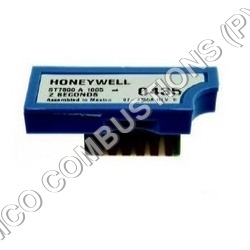
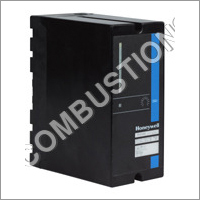
We are a reputed entity in this domain betrothed in offering an extensive range of Honeywell Flame Detectors. These are demanded to use in industrial places, residential and commercial apartments for detecting the flame at a distance. In adherence with set industry norms, these detectors are precisely manufactured by our experts team utilizing high grade materials. Furthermore, these Honeywell Flame Detectors can be availed from us in varied technical specifications.
Features:
- Robust construction
- Accurate result
- Resistant to heat
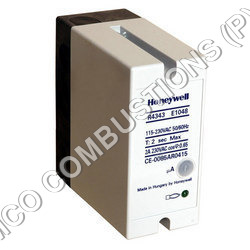
Model R4343 performs flame detection function only .
Advanced Multi-Spectrum DetectionLeverage the precision of Honeywell flame detectors equipped with UV, IR, and multi-spectrum technologies. These detectors rapidly identify fires within hazardous industrial zonesoffering enhanced security where safety and continuity are critical. The adjustable sensitivity ensures accurate detection while minimizing false alarms.
Built for Severe EnvironmentsEngineered with aluminum alloy or stainless-steel housings and rated IP66/67, these detectors withstand harsh industrial conditions. Function reliably within a wide temperature range (-40C to +75C), resistant to dust, water, and atmospheric pressures, making them ideal for oil, gas, and power sectors.
Efficient Maintenance & IntegrationEnjoy effortless maintenance facilitated by self-test featuresboth automatic and manual diagnostics. The detectors are compatible with Honeywell and industry-standard fire control panels, simplifying integration via relay, 4-20 mA, and digital protocols. LED indicators and remote alarm signals provide clear, real-time status.
FAQs of Honeywell Flame Detectors:
Q: How do Honeywell flame detectors identify fires in industrial settings?
A: Honeywell flame detectors utilize UV, IR, or multi-spectrum sensing technologies to detect unique radiation signatures emitted by flames. This enables rapid identification of fires, often in less than 3 seconds, reducing the risk of false alarms and ensuring timely alerts in hazardous applications.
Q: What benefits does the self-test feature offer to facility operators?
A: The automatic and manual self-test functions regularly verify detector integrity without manual intervention. This minimizes maintenance needs and helps ensure continuous, reliable operation, providing confidence that the system is fully functional and ready to respond to fire incidents.
Q: When should you adjust the sensitivity settings on your flame detector?
A: Sensitivity settings should be tailored during installation or maintenance to suit the specific environments requirements. Adjusting these limits ensures accurate detection for the location, balancing between high sensitivity for early warning and the reduction of false alarms caused by background sources.
Q: Where can Honeywell flame detectors be installed for optimal performance?
A: These detectors are intended for industrial settings such as oil and gas facilities, chemical plants, and power stations. With a typical 90 field of view and robust mounting options (surface or bracket), they can be positioned to cover critical zones, ensuring extensive and effective fire monitoring.
Q: What is the process for integrating these detectors with fire control systems?
A: Honeywell flame detectors can be easily integrated with Honeywell or other standard fire control panels using relay contacts (SPDT), 4-20 mA current loop, RS-485 Modbus, or HART communications. This versatility supports seamless incorporation into existing safety architectures.
Q: How does the enclosure material contribute to the detectors durability?
A: The use of aluminum alloy or stainless steel for the enclosure provides exceptional strength and corrosion resistance. Coupled with high ingress protection (IP66/67), the detectors are safeguarded against dust, moisture, and harsh atmospheric conditions typically encountered in industrial applications.
Q: What are the usage advantages of the adjustable field of view and mounting options?
A: The combination of a wide 90 horizontal/vertical field of view and versatile surface or bracket mounting allows for thorough area coverage. This flexibility ensures the detector can be optimally positioned to protect valuable assets and personnel across variable site layouts.




 Send Inquiry



 Send Inquiry
 Send Inquiry
 Send SMS
