About Honeywell Flame Detection
Honeywell Flame Detection
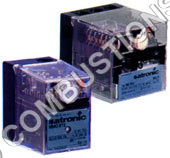
Model R 4348 is used for application in large commercial and industrial burner installation where they are used as simple flame switch with 3 pole flame relay and 3 pole line voltage load relay . this can perform flame detection and burner safe start function. The potential free relay contacts , enables the use of this with wide range of logic schemes as per customer needs The add - on features include ; Flame intensity bar graph and 4- 20 mA flame intensity out out .
Advanced Flame Detection TechnologyDesigned for both hydrocarbon and non-hydrocarbon fires, Honeywell flame detectors harness UV and IR sensing for accurate flame identification. The expansive 90 horizontal viewing angle, high-speed detection, and continuous self-diagnostic function ensure exceptional protection and operational confidence in mission-critical applications.
Engineered for Harsh Industrial EnvironmentsEncased in a rugged aluminum alloy body with durable epoxy coating, these detectors are explosion-proof (Class I, Div. 1, Groups B, C & D), IP66/IP67 rated, and suitable for mounting on walls or poles. Their resilience and reliability make them ideal for demanding sectors, including oil & gas, petrochemical, and power generation.
FAQs of Honeywell Flame Detection:
Q: How does the Honeywell flame detector ensure rapid fire detection?
A: The Honeywell flame detector utilizes advanced UV and IR optical sensors to detect flames in under three seconds, enabling quick response to fire hazards and minimizing potential damage.
Q: What types of environments can this flame detector be used in?
A: These detectors are designed for industrial fire and gas detection in environments like oil & gas facilities, chemical plants, power generation units, petrochemical sites, and similar settings requiring explosion-proof safety.
Q: Where should I install the Honeywell flame detector for optimal coverage?
A: Install the detector on walls or poles to maximize coverage of the monitoring area, utilizing its 90 horizontal viewing angle. Ensure it is positioned within sight lines to detect potential flames directly.
Q: What is the process of integrating this flame detector into an existing safety system?
A: Integration is streamlined via relay contacts, 4-20 mA, or RS-485 Modbus outputs. Connect the detector to the sites safety control systems, ensuring proper power supply (24 V DC nominal) and cable entry fitting.
Q: What are the key benefits of the built-in self-diagnostic function?
A: The built-in automatic self-diagnostic continuously monitors the detectors health, offering real-time alerts on performance issues, thus ensuring ongoing reliability and reducing maintenance requirements.
Q: When is it necessary to replace or service this detector?
A: Thanks to its mechanical life exceeding 100,000 cycles and robust self-diagnostic capabilities, service is only typically required if alerted by the detector or as part of scheduled plant maintenance checks.
Q: What makes the Honeywell flame detector suitable for harsh conditions?
A: The detector features explosion-proof construction, an IP66/IP67 environmental rating, a wide operating temperature range (-40C to +75C), and resistance to humidity (up to 95% RH non-condensing), making it resilient against tough industrial settings.




 Send Inquiry




 Send Inquiry
 Send Inquiry
 Send SMS
